


Choosing reliable structural components for industrial machinery isn’t just about surface size and appearance. Most engineering buyers only focus on dimensional tolerance and unit price when selecting aluminum alloy die casting parts, ignoring core hidden defects that cause frequent equipment failures, shortened service life, and unexpected maintenance costs. These invisible problems often lead to assembly delays, safety risks, and long-term profit losses that cannot be fixed by simple surface polishing or size adjustment. Understanding the internal quality standards and application adaptability of die cast aluminum parts directly determines the stability of your entire production line.
Many factories suffer from frequent cracking, air holes, and porosity on finished castings after mass production. These flaws do not appear during initial inspection but gradually expose themselves under high temperature, vibration, and frequent load changes. Unqualified die casting raw material ratios, outdated mold cooling processes, and incomplete degassing procedures are the root causes. Professional customized casting solutions from professional aluminum die casting enterprises strictly control every melting and molding link to eliminate internal micro-defects from the source, greatly reducing later scrapping and rework rates.
Corrosion resistance and wear resistance are two frequently overlooked performance indicators of aluminum die cast components. Working in humid, dusty, oily, or outdoor harsh environments, ordinary aluminum parts oxidize quickly, deform slightly, and loosen matching gaps. Over time, mechanical precision drops sharply, abnormal noise occurs, and overall equipment efficiency declines continuously. Standard high-density die-cast aluminum alloy features optimized material density, uniform internal structure, and excellent natural corrosion resistance, matching long-term stable operation requirements of automotive accessories, communication equipment, intelligent machinery, and industrial housings.
Assembly matching accuracy remains the biggest headache for bulk purchasing customers. Low-precision die cast parts require repeated trimming, grinding, and secondary processing before installation, which wastes labor hours, extends production cycles, and damages the original structural strength of parts. Precision die casting technology controls multi-dimensional dimensional tolerance within ultra-small ranges, achieving direct interference-free assembly. It effectively avoids gaps, looseness, jamming and other faults caused by mismatched sizes, greatly improving overall assembly efficiency and finished product qualification rate.
Heat deformation resistance directly affects continuous operation stability of mechanical equipment. Aluminum alloy parts bear alternating high and low temperatures during long-time operation. Inferior products produce irreversible thermal deformation, changing original structural shape and destroying coordinated operation of matching parts. Mature die casting forming technology optimizes alloy formula and pressure molding parameters, making finished parts stable in high and low temperature environments, low thermal expansion coefficient, and no obvious shape change under frequent temperature fluctuations. It fully meets continuous high-load operation demands of automated industrial equipment.
Common Performance Comparison Of Ordinary Aluminum Die Castings & High-Quality Precision Die Cast Parts
| Performance Index | Ordinary Low-Cost Die Cast Parts | Premium Precision Aluminum Alloy Die Cast Parts |
|---|---|---|
| Internal Structure Density | Loose, obvious porosity and air holes | Compact and uniform, no hidden internal defects |
| Dimensional Tolerance Range | ±0.15mm~±0.3mm | ±0.02mm~±0.08mm |
| High Temperature Resistance | Easy deformation above 120℃ | Stable structure below 180℃ |
| Corrosion & Oxidation Resistance | Poor, easy rust and discoloration | Strong anti-oxidation, suitable for harsh outdoor environments |
| Service Life | 6–12 months under frequent load | 3–5 years stable service |
| Secondary Processing Demand | High frequent trimming and polishing | Almost no extra processing required |
Most buyers mistakenly equate low unit price with high cost performance. In fact, cheap die cast parts bring hidden chain losses: frequent part replacement increases logistics and labor costs, unqualified finished products damage brand reputation, and sudden mechanical failures cause unpredictable production shutdown losses. High-precision customized aluminum die casting parts reduce overall comprehensive cost in the whole life cycle, even if single purchase price is slightly higher. Stable quality reduces maintenance frequency, lowers scrap rate, and ensures uninterrupted orderly production.
Different industry scenarios put completely different demands on wall thickness, surface treatment, hole position layout and structural strength of die cast aluminum parts. Blindly using universal standard parts will lead to mismatched load bearing, insufficient structural strength, or unnecessary material waste. Custom mold opening, personalized structure design, anodizing, powder spraying, polishing and other diversified surface treatments can adjust part performance according to actual working conditions, maximizing matching degree between components and terminal equipment.
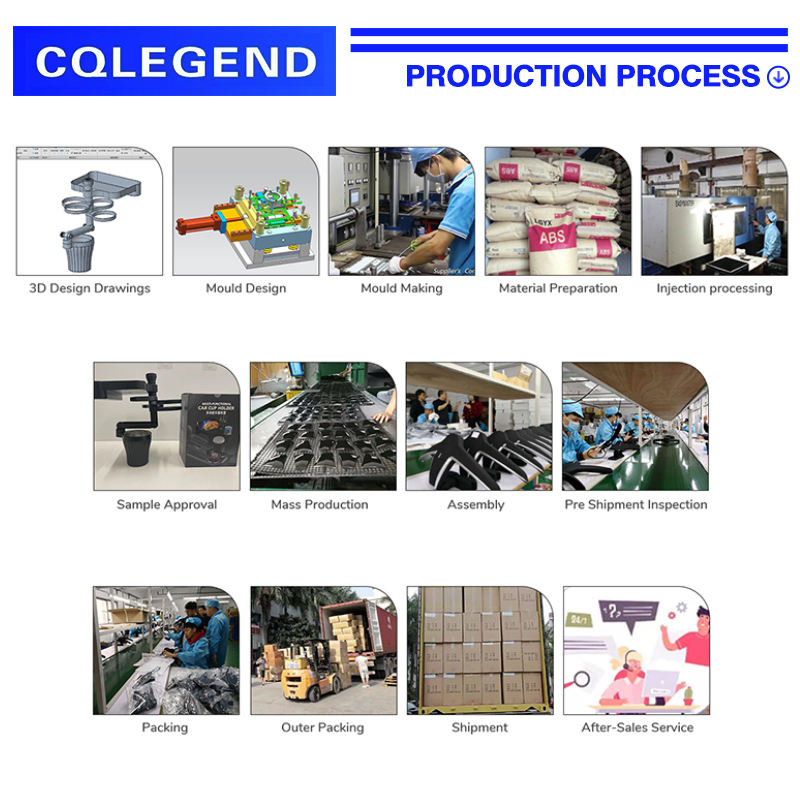
Long-term mass supply stability also determines cooperative value of die casting suppliers. Irregular small factories have unstable production capacity, uneven batch quality, frequent delivery delays, and inconsistent standards between different batches. Formal standardized die casting production lines achieve unified quality control, stable mass output, on-time delivery, and complete after-sales quality tracking. It protects continuous large-scale production plans of downstream enterprises and avoids supply chain interruption risks.
In summary, selecting aluminum alloy die casting components should focus on internal quality, environmental adaptability, assembly matching performance and whole-life cost, rather than only superficial parameters and immediate quotation. Scientific material selection, standardized production process and customized precision processing can thoroughly solve deep-seated pain points in casting application, help enterprises improve product quality, reduce comprehensive costs, and gain lasting competitive advantages in industrial manufacturing.