


Industrial equipment reliability, assembly matching accuracy, and long-term service life are all closely related to the quality of precision structural components. Many manufacturing enterprises blindly pursue low procurement costs while ignoring material stability, dimensional tolerance control, and surface processing quality, which eventually lead to frequent equipment failures, increased maintenance costs, and shortened overall service cycles. Most conventional die casting products cannot adapt to high-pressure, high-temperature, and complex working environments, exposing hidden safety hazards that are difficult to detect in daily operation. Choosing qualified aluminum alloy die casting parts can fundamentally avoid these industrial pain points and stabilize the whole production chain operation.
A large number of downstream manufacturers have been troubled by uneven wall thickness, loose internal structure, pores, and deformation during die casting production. These hidden defects do not appear on the surface immediately, but will gradually cause cracking, air leakage, oil leakage, and poor stress resistance after long-term operation. Ordinary die casting processes lack precise mold control and vacuum die casting technology support, making it impossible to achieve ultra-low defect rate mass production. Professional customized die casting services from Wuzhou Chuanqi Precision Parts Co., Ltd. adopt standardized full-process quality control, effectively solving the structural instability problems that plague most processing factories.
Dimensional deviation is another key underlying problem affecting industrial assembly efficiency. A tiny tolerance error beyond the standard range will cause difficult assembly, loose fitting, abnormal vibration, and matching damage of supporting accessories. Mass-produced universal parts rarely carry customized tolerance calibration, resulting in repeated debugging, scrapped finished products, and delayed construction progress for customers. Precision aluminum die casting strictly controls each size parameter according to drawing requirements, realizes high-consistency batch production, and greatly improves the overall assembly efficiency and mechanical coordination performance of complete machines.
Corrosion resistance, wear resistance and lightweight performance determine the application scope of die casting components in automobiles, intelligent machinery, communication equipment and power accessories. Iron and steel cast parts are heavy, easy to rust and wear fast; ordinary plastic parts cannot bear high load and high temperature impact. Aluminum alloy material itself has excellent lightweight ratio, natural anti-corrosion characteristics and good thermal conductivity, which perfectly matches the lightweight upgrading trend of modern intelligent equipment and new energy industrial equipment. Reasonable die casting structure optimization can further enhance pressure resistance and impact resistance without increasing product weight.
Post-processing matching degree directly affects the final use effect and appearance grade of die casting products. Many finished die castings only complete simple molding, lacking deburring, polishing, anodizing, painting, CNC precision machining and other finishing processes. Rough edges and burrs will scratch pipelines and precision accessories; incomplete surface treatment leads to rapid oxidation and color change in humid and harsh environments. Integrated molding + multi-stage finishing processing technology ensures smooth surface, accurate hole position, stable surface performance, and meets both mechanical installation standards and appearance quality requirements of high-end equipment.
Performance Comparison Of Common Die Casting Material
| Material Type | Weight Characteristic | Pressure Resistance | High Temperature Resistance | Corrosion Resistance | Service Life | Main Application Limitations |
|---|---|---|---|---|---|---|
| Ordinary Zinc Alloy | Heavy density | Medium strength | Poor heat resistance | Weak anti-rust ability | Short | Not suitable for high temperature and long-time continuous operation |
| Iron Casting | Extremely heavy | High static pressure | Good heat resistance | Easy to rust and corrode | General | Increases equipment load, reduces energy efficiency seriously |
| Common Plastic Structural Parts | Ultra-light | Low bearing capacity | Easy to deform at high temperature | Poor weather resistance | Short | Cannot withstand mechanical impact and frequent stress changes |
| High-Quality Aluminum Alloy Die Casting | Lightweight and high strength | Excellent compressive performance | Stable at high temperature | Strong anti-corrosion and weather resistance | Long service life | Almost no obvious environmental and load limitations |
Enterprises often overlook fatigue resistance testing of die casting parts in actual procurement. Long-period cyclic stress operation will cause cumulative damage inside ordinary castings, resulting in sudden fracture and safety accidents. High-density aluminum alloy die casting adopts refined smelting and compact molding process, the internal crystal structure is uniform and dense, which can resist repeated mechanical impact and frequent load changes, and maintain stable performance under continuous 24-hour operation. It fully meets the safety certification standards of mechanical parts in harsh industrial scenarios.
Cost-effective selection logic is not pursuing the lowest unit price, but balancing material grade, process precision, defect rate, after-sales matching and overall service cycle. Low-quality die castings seem cheap in the early stage, but the frequent replacement, equipment shutdown maintenance and scrap loss bring huge hidden costs. Custom precision aluminum die casting achieves long-cycle stable use, reduces later maintenance frequency, optimizes comprehensive production cost, and brings continuous practical benefits for enterprise long-term operation.
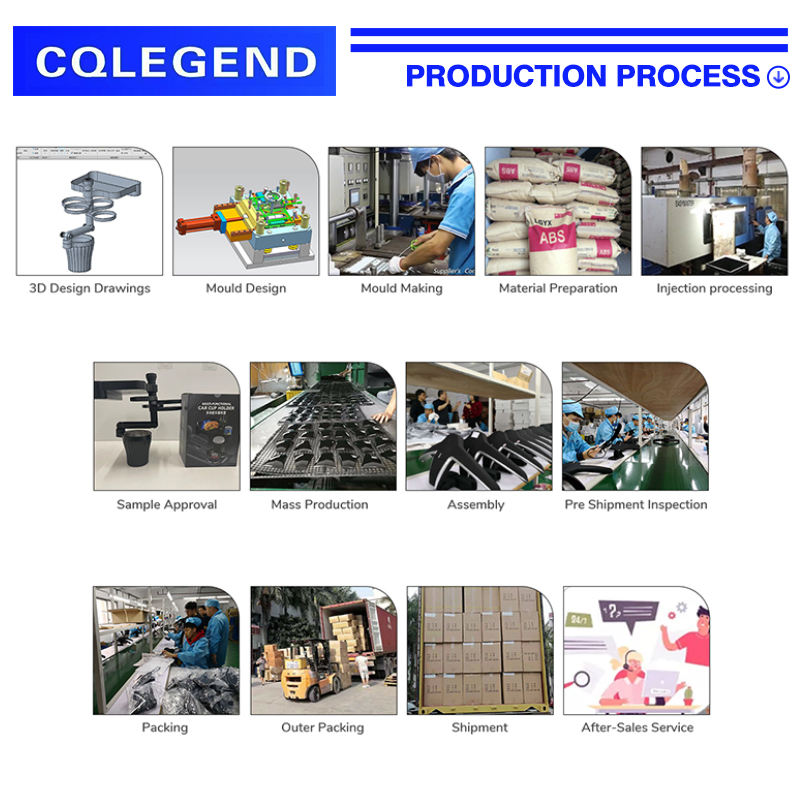
From drawing customization, mold opening development, mass die casting production to finished precision processing and delivery, standardized one-stop service avoids multiple docking errors and process disconnection problems. Professional technical team optimizes product structure according to actual working conditions, avoids unreasonable design that causes easy damage, improves product stress distribution, and maximizes practical application value. All finished products pass strict dimensional inspection, air tightness test and strength test before leaving the factory, ensuring each batch of parts can meet actual production and assembly requirements stably.
In summary, excellent aluminum alloy die casting parts are not just simple mechanical accessories, but important guarantees for equipment stability, production efficiency and operation safety. Solving deep-seated problems such as internal defects, dimensional errors, poor environmental adaptability and short service life can help enterprises avoid unnecessary losses and gain stronger competitive advantages in industrial processing and finished product supporting fields. Choosing professional customized precision die casting solutions is a cost-effective and reliable long-term choice for modern manufacturing upgrading.