


Poor dimensional stability, short service life, frequent porosity defects, and mismatched assembly tolerances have long plagued machinery and automotive component production. Most buyers only focus on surface appearance and unit price when purchasing cast aluminum parts, ignoring core structural weaknesses and material compatibility issues that trigger long-term equipment failures. Choosing reliable aluminum alloy die casting components eliminates invisible quality risks, reduces later maintenance costs, and stabilizes continuous mass production for industrial processing lines. Many factories suffer repeated downtime and after-sales complaints simply because they overlook professional casting process standards and customized structural optimization capabilities.
Irregular internal pores are the most concealed fatal defect in ordinary aluminum die castings. These tiny gaps cannot be detected by simple visual inspection, but they gradually cause oil leakage, air leakage, pressure drop, and structural fracture under high temperature, vibration, and long-term load operation. Low-cost rough casting products seem economical in the early stage, but they bring unpredictable safety hazards to precision equipment, automobile accessories, and intelligent mechanical structures. Cooperating with professional casting manufacturers like Wenzhou Chuanqi Precision Casting ensures strict vacuum die-casting process control, effectively suppressing internal porosity and achieving dense, uniform metal tissue inside finished parts.
Most conventional aluminum casting products cannot adapt to complex harsh working environments. High temperature corrosion, frequent impact friction, humid corrosive air, and frequent load changes will accelerate material aging and deformation. Unqualified raw aluminum materials contain excessive impurities, leading to low hardness, poor wear resistance, and easy cracking during stamping and assembly. Standard customized die-casting parts adopt high-purity aluminum alloy formulas, with optimized heat treatment processes to greatly enhance tensile strength, corrosion resistance, and fatigue resistance, matching long-cycle stable operation of automotive, motor, hydraulic, and automation equipment.
Assembly matching errors remain a widespread hidden trouble in bulk die casting procurement. Non-standard precision control causes inconsistent product sizes, loose fitting gaps, tight interference assembly, and repeated trimming and reprocessing. This wastes a great deal of labor hours, delays production schedules, and reduces overall finished product qualification rates. Professional customized die casting strictly follows millimeter-level dimensional tolerance standards, conducts full-size inspection of each batch, and ensures unified interchangeability of mass parts without manual adjustment before direct assembly.
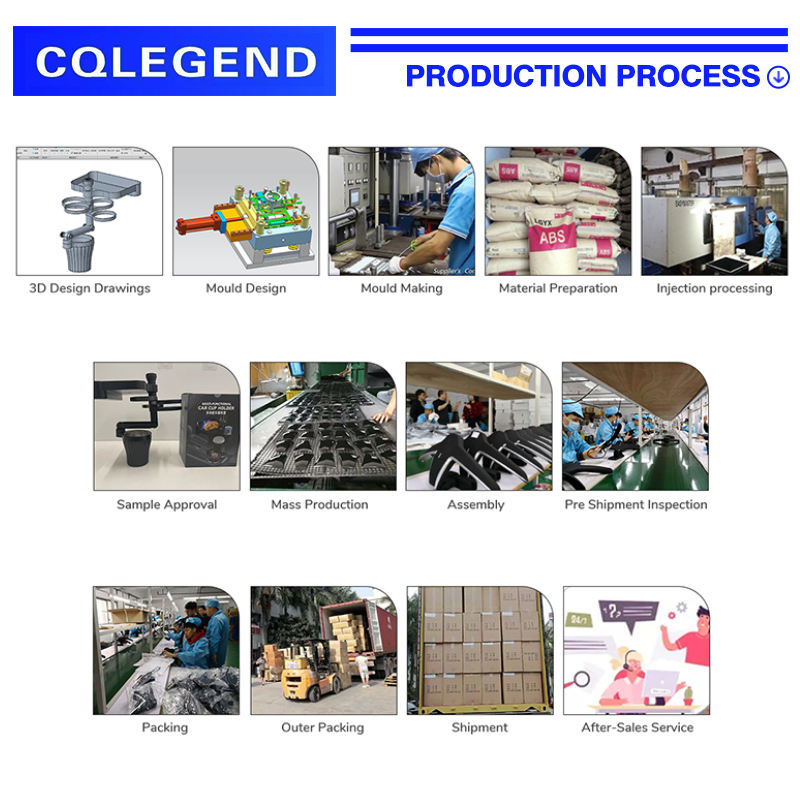
Many purchasers misunderstand that all die cast aluminum parts have identical performance. In fact, casting pressure, mold precision, cooling speed, post-processing polishing, and surface anodizing treatment all directly determine final product quality. Simple surface treatment cannot resist outdoor oxidation and wear, while unreasonable mold design leads to uneven stress concentration and easy breakage during use. Systematic full-process precision production completely solves these common pain points, covering raw material smelting, mold opening customization, die casting forming, CNC precision machining, surface anti-corrosion treatment, and finished product testing in one complete chain.
Core Performance Comparison of Ordinary Die Castings & Premium Precision Aluminum Alloy Die Castings
| Performance Indicator | Ordinary Low-Cost Die Castings | High-Precision Custom Aluminum Alloy Die Castings |
|---|---|---|
| Internal Structure | Serious porosity, loose tissue | Dense structure, zero obvious air holes |
| Dimensional Tolerance | ±0.15mm or larger error | Stable control within ±0.02mm |
| Surface Flatness | Rough burrs, uneven texture | Smooth finish, no redundant burrs |
| High Temperature Resistance | Poor, easy deformation above 120℃ | Stable performance below 200℃ continuous operation |
| Wear Resistance & Toughness | Brittle, easy to crack and break | High toughness, impact resistant and durable |
| Service Cycle | 3–6 months frequent replacement | More than 3 years stable use |
| Post-Processing Compatibility | Hard to polish, poor electroplating adhesion | Good adhesion, suitable for anodizing, spraying and polishing |
Long-term bulk procurement of unqualified die casting parts will form a cumulative cost loss that far exceeds unit price savings. Frequent part replacement increases logistics and labor costs, unqualified finished products cause customer returns and brand damage, and sudden component fracture may trigger entire equipment shutdown accidents. Reasonable selection of standardized precision aluminum die castings optimizes the whole production cost structure, improves product qualification rate, and enhances overall competitiveness of terminal machinery and auto parts products.
Custom personalized mold opening service also meets diversified non-standard component demands. Different industries have unique structural requirements for shell parts, base parts, connecting brackets, and power accessories. Universal finished castings cannot fit special installation spaces and special stress environments, resulting in forced modification and performance degradation. Independent mold design and customized die casting production perfectly match special size, special shape, and special load requirements, realizing one-to-one matching for various intelligent equipment, auto accessories, hydraulic machinery, and electromechanical shells.
Surface treatment quality directly affects the anti-oxidation and aesthetic durability of aluminum die castings. Inferior paint and simple oxidation treatment peel off quickly outdoors, causing aluminum surface corrosion and rust. Standard professional processes include natural anodizing, hard anodizing, powder spraying, electrophoretic treatment, etc., forming a dense protective film on the part surface, isolating moisture and corrosive media, and maintaining stable appearance and performance in outdoor and humid industrial environments for a long time.
In summary, selecting high-quality aluminum alloy die casting parts is not only a choice of accessories, but a key decision related to production safety, cost control and product quality reputation. Avoiding shallow procurement logic focusing only on price, attaching importance to internal material quality, precision control and process integrity, can fundamentally solve long-standing hidden faults in die casting application, and achieve stable, efficient and low-cost operation of industrial production lines.